
You’ve applied to job after job, but you’re not getting interviews. It’s frustrating, especially when you know you could do the work. There isn’t always one clear reason. Sometimes the applicant pool is strong, a position changes, or an employer has a very specific need. But after years of reviewing résumés, I see some patterns…
You’ve applied to job after job, but you’re not getting interviews. It’s frustrating, especially when you know you could do the work.
There isn’t always one clear reason. Sometimes the applicant pool is strong, a position changes, or an employer has a very specific need. But after years of reviewing résumés, I see some patterns that job seekers can address.
Here are 10 places I’d look first.
1. You’ve listed duties, but not what you accomplished
“Responsible for customer accounts” tells me what was assigned to you. It doesn’t tell me how well you did it or what changed because of your work.
Look for opportunities to show results. Did you improve a process, solve a recurring problem, increase retention, create a resource, or reduce errors? Your accomplishments don’t all need a percentage attached, but they should give the reader a better sense of the value you brought.
In a competitive applicant pool, that difference matters.
2. Your accomplishments are missing context
Numbers can be helpful, but a number by itself doesn’t always tell the full story. “Increased customer retention by 18%” raises questions: Across how many accounts? Over what period? What did you do to achieve it?
A stronger bullet might say:
Increased the renewal rate from 71% to 89% across 34 accounts, booking $2.1 million over 12 months after rebuilding the quarterly business review process.
Now I can see the starting point, the scope, the result, and your contribution.
Put the strongest part of each bullet near the beginning. Don’t make someone read to the last few words to discover the accomplishment.
3. The layout makes your résumé hard to read
A résumé can contain great experience and still make a poor first impression if information is scattered across the page.
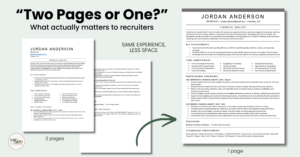
You don’t need unusual fonts, bright colors, or elaborate formatting to get noticed. Clear headings, consistent dates, enough space between sections, and a straightforward layout will serve you better. A recruiter should be able to find your job titles, employers, dates, and accomplishments without hunting for them.
Simple is usually best.
4. You didn’t follow the application instructions
If an employer requires a cover letter, include one. If a role requires a license or certification and the application asks you to upload it, provide the document.
These steps can feel tedious, but they may be necessary for the employer to review your qualifications. Skipping them can take you out of consideration before anyone gets to the strengths on your résumé.
Do one final check of the posting and application requirements before you submit.
5. The employer may see a mismatch in level or pay
Yes, being overqualified can affect whether you’re invited to interview. If a position asks for one to three years of experience and you have 15, the employer may wonder whether the role or its pay range will meet your expectations.
That doesn’t mean you can’t want a less senior role. If you’re making an intentional change, make your interest in that kind of work clear. But if you’re repeatedly applying well below your experience level and not hearing back, consider targeting roles that are closer to your background and compensation needs.
6. You’re applying to jobs that aren’t a close enough match
I’m all for stretching into a new role. But if you don’t meet most of the qualifications, applying is probably not the best use of your time.
My rule of thumb is to meet at least 75% of the requirements before you apply. Pay particular attention to qualifications the employer cannot work around, such as a required license or certification.
That means reading the entire posting. Make sure you understand what the job actually involves and whether it lines up with your experience and what you want next.
7. You’re applying too quickly
Swipe-to-apply tools make it easy to send out a lot of applications. The problem is that speed can keep you from noticing whether you’re qualified, whether you want the job, or whether the employer has asked for something specific.
I would rather see you spend a little more time on a smaller number of good-fit roles than send your résumé everywhere. Before you hit Apply Now, read the posting and decide whether this is a job you’d genuinely want to interview for.
8. Your résumé doesn’t connect your experience to the job
You may be qualified and still get passed over if the connection isn’t clear on the page.
Tailoring your résumé does not mean inventing experience or rewriting it from scratch every time. It means choosing the most relevant details from your background and making them easy to find. If the posting emphasizes a skill you’ve used, don’t make the reader dig through three pages to discover it.
This matters even more when you’re changing industries or relying on transferable skills. You understand why your experience applies. The person reading your résumé needs to understand it, too.
9. The top of the page doesn’t tell me what you do
The top third of your résumé is valuable space. When I start reading, I want to understand what kind of work you do, where your strengths are, and why you might fit this role.
A vague summary that could describe anyone won’t help much. Use that space to establish your direction and bring your most relevant experience forward. Then make sure the rest of the résumé supports the picture you’ve introduced.
10. Your work history leaves too many questions unanswered
Make your job titles, employers, and dates easy to follow. If there’s a significant gap, a career change, or an unusual transition, think about whether a brief explanation would help the reader understand your path.
A gap is not automatically a red flag. People step away from work to care for family, return to school, address health needs, or navigate a layoff. You don’t have to share private details, but you can give enough context that the reader isn’t left guessing.
You also don’t need to keep revising your résumé endlessly. Once your history is clear and the document reflects the roles you want, put your energy into applying thoughtfully.
One more thing to consider
For some professions, I’d also check your online presence. If you work in recruiting or sales, for example, a LinkedIn profile can help an employer see how you present yourself professionally. It isn’t essential for every field, but in those roles, its absence may raise a question.
Where to start
If you’re not getting interviews, I would start with two questions: Am I applying to the right jobs? And does my résumé make my value clear for those jobs?
Choose a few recent postings that genuinely fit your goals. Compare their requirements with the top of your résumé and your strongest bullet points. Then make the most important connections easier to see.
You don’t need a new résumé for every application or another round of endless edits. You need a clear target, a readable document, and evidence that shows what you can bring to the role.
Want another set of eyes on your résumé?
If you’re applying to roles that fit but aren’t getting interviews, I can help you see where your experience may not be coming through clearly.